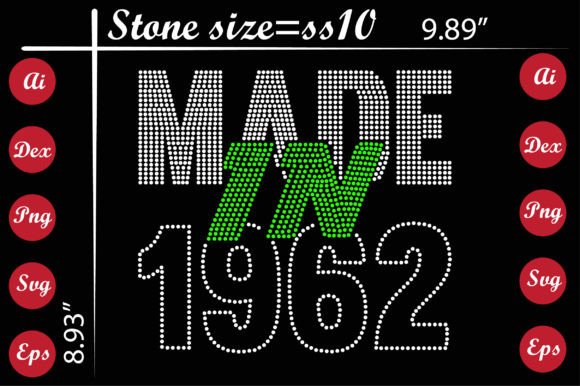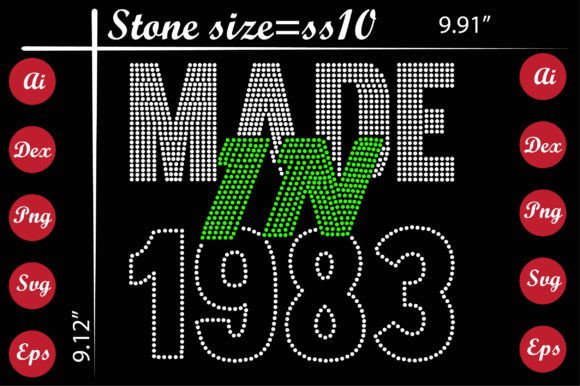
Made in 1983 Rhinestone Templates: Design & Project Ideas
There is a specific kind of nostalgia attached to 1983. It wasn’t the neon-soaked peak of the late 80s, nor the gritty punk of the 70s; it was a transitional time where analog met digital and bold graphic design started taking shape. Capturing that vibe in modern crafting is the goal of the Made in 1983 Rhinestone Templates Design. This isn't just a set of files; it is a bridge between retro aesthetics and modern production capabilities. As a designer who values both history and technical precision, I find this template set particularly compelling because it offers that tactile, sparkling quality that flat digital design often lacks.
The Visual Language of 1983
When we talk about the "personality" of the Made in 1983 Rhinestone Templates Design, we are looking at a style that embraces the geometry and optimism of early 80s graphic design. The typography associated with this era often features strong lines, balanced weight, and a sense of futurism that feels distinctly retro today. In this specific design, the aesthetic is tailored for the rhinestone medium. The shapes are clean enough to be recognizable but distinct enough to hold adhesive and stones without losing legibility.
The visual appeal here lies in the texture. A standard vector logo is flat, but a rhinestone template adds physical depth and light reflection. This design leverages that physicality. The letterforms are constructed to maximize sparkle, utilizing negative space effectively so that the "1983" text pops against the fabric of a t-shirt or the surface of a tote bag. It is a premium font style adapted for a specific, tactile output.
Technical Precision: The Instant Download Package
In the professional world of design assets, versatility is king. A great idea is useless if it cannot be executed across different mediums. This is where the Made in 1983 Rhinestone Templates Design package shines. It is not just a single image; it is a comprehensive toolkit. The description highlights an instant download that includes a ZIP folder containing a wide array of file formats.
For the uninitiated, the variety here is crucial for professional workflow. You receive:
- Ai (300dpi) & EPS (300dpi): These are the industry standards for vector editing. If you need to scale the design for a massive banner or tweak a letterform in Illustrator, these are your source files. They ensure the design remains crisp at any size.
- SVG File (300dpi): The SVG is the darling of the modern web and cutting machine world. It is essential for using with Cricut or Silhouette machines, as it preserves the path data needed to cut templates accurately.
- DXF File (300dpi): A legacy format that remains vital for certain CAD software and older cutting machines. Including this ensures backward compatibility.
- Transparent PNG (300ppi): This is what most marketers and bloggers will use immediately. With a transparent background, you can overlay the design onto mockups or use it in social media graphics without worrying about white boxes around the edges.
- Jpeg (300dpi): The universal standard for quick viewing and printing where transparency isn't needed.
This collection of design assets signals that the creator understands modern production pipelines. It saves time, which is the most valuable resource for any entrepreneur or crafter.
Strategic Applications: Beyond the T-Shirt
While the primary use case for rhinestone templates is apparel, the versatility of the Made in 1983 Rhinestone Templates Design allows it to permeate various aspects of brand identity and product creation. As a strategist, I look at how a single asset can generate multiple revenue streams or engagement points.
Apparel and Merchandise
The obvious path is the custom t-shirt market. Whether you are running a print-on-demand service or crafting for a local market, the "Born in 1983" demographic is massive. These are adults in their early 40s with disposable income who appreciate a nod to their youth. Using this template for hoodies, denim jackets, or caps creates a high-perceived-value item. The rhinestone texture elevates a standard garment into a "boutique" piece.
Digital Presence and Content Creation
For bloggers and content creators, the PNG files serve as excellent visual anchors. Imagine a blog post titled "Turning 40: A Retrospective." Using the Made in 1983 graphic as a header image or a watermark adds thematic depth. It functions similarly to a display font—it grabs attention and sets the mood immediately. It works well in web design elements, particularly for pop culture blogs, vintage shops, or retro-themed event pages.
Physical Products and Packaging
Think beyond fabric. This design works beautifully on hard surfaces. Applying the template to mugs, cushion covers, or even wood signs requires a design that is robust. The bold nature of this typeface ensures it doesn't get lost on textured surfaces like ceramic or burlap. For small business owners looking to expand their packaging design, using a rhinestone motif on gift boxes or loyalty cards can create a memorable unboxing experience.
Design Principles: Hierarchy, Pairing, and Readability
Using a specialized template like this requires an understanding of visual hierarchy. The Made in 1983 Rhinestone Templates Design is naturally high-contrast and high-impact. It is the hero of the layout. Therefore, it should not be paired with other loud elements.
Font Pairing: If you are adding additional text to your project (like a subtitle or a name), you need a supporting cast that doesn't upstage the star. Since the rhinestone template mimics a bold, decorative serif font or a chunky sans serif font, pair it with something clean and understated. A simple geometric sans-serif for subtext works well. Avoid script fonts or overly ornate handwritten fonts for the surrounding text, as the visual noise will clash with the texture of the rhinestones.
Readability: Rhinestone designs rely on the "implied" shape. The brain connects the dots (or stones) to form the letter. Because of this, the font used in the template must have high legibility. This specific design maintains that clarity. However, when placing it on a busy background (like a floral pattern or a heavily textured photo), ensure there is enough contrast. A drop shadow or a backing shape (like a solid circle or rectangle behind the text) can help separate the creative font design from the background noise.
Evaluating Fit for Your Project
Before integrating any design assets, you must evaluate the fit. Ask yourself these practical questions:
- Does the medium support the detail? Rhinestone templates are essentially dot-matrix images. If you are printing on a high-resolution digital printer, the "dots" might look like a filter rather than a physical texture. This design is best used with actual vinyl, felt, or rhinestone flock, or as a stylistic choice in digital mockups.
- Is the licensing commercial? The prompt notes this is perfect for projects you might have. Always verify the usage rights. If you are selling the final product (t-shirts, mugs), you need a commercial font license or template license. This allows you to monetize your creativity without legal friction.
- Does it align with the era? While 1983 is specific, the style can be adapted. It fits perfectly into "retro," "vintage," "birthday milestone," or "classic rock" themes. It might feel out of place in a hyper-modern, minimalist tech startup context, but it is perfect for lifestyle and heritage brands.
The Made in 1983 Rhinestone Templates Design is more than just a date; it is a stylistic statement. It combines the technical requirements of modern modern typography production with the tactile warmth of handcrafted goods. By utilizing the full range of included files—from SVG to Ai