Recipe Book Templates | Cooking Planner for Organized Kitchens
For food bloggers, culinary entrepreneurs, and passionate home cooks, the line between a chaotic collection of notes and a professional publication often comes down to organization. When you are managing a brand or a personal project, the visual consistency of your brand identity matters just as much as the taste of the food. This is where the Recipe Book Templates | Cooking Planner steps in as a vital design asset. It moves beyond simple text formatting, offering a structured, visually engaging framework designed specifically for the culinary arts.
Visual Personality and Design Aesthetic
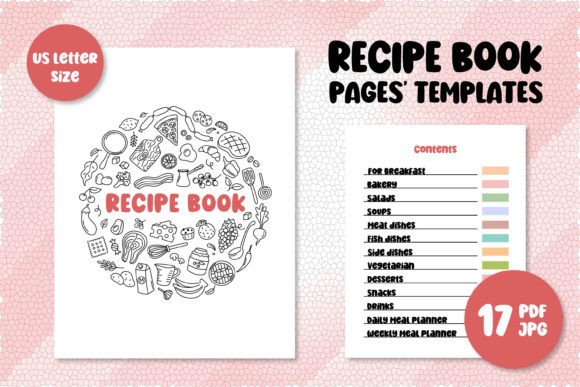
The defining characteristic of these recipe book templates is their "cute style," characterized by intricate doodle elements featuring food and kitchen supplies. This is not the sterile, high-contrast look of a minimalist modern typography project. Instead, it embraces a warm, approachable aesthetic that feels hand-crafted. The visual language relies on illustration rather than complex font pairing to create personality. While the templates utilize standard US Letter sizing, the design layout maximizes space for both the visual doodles and the critical data points—ingredients, quantities, and directions.
From a design assets perspective, the appeal lies in the balance between whimsy and utility. The doodle elements serve as a border or background texture, framing the content without overwhelming it. This style is particularly effective for brands that want to convey a sense of homemade authenticity or playful energy. If your project requires a premium font look with a handwritten font vibe, the illustrative nature of these pages achieves that effect without the need for custom lettering.
Strategic Applications for Creators and Businesses
The versatility of the Cooking Planner extends across various formats, making it a robust tool for editorial design and digital projects alike. For the small business owner or content creator, here is how this template set fits into different workflows:
- Content Creation and Blogging: Food bloggers can use the specific section pages (breakfast, meat, fish, bakery) to categorize content physically. Printing these out allows for a tangible "mood board" approach to editorial design, helping to plan seasonal content calendars before a single line of code is written for a website.
- Packaging Design and Product Inserts: If you sell artisanal food products or kitchenware, these templates can be adapted for packaging design. A printed recipe card included with a purchase adds immense value. The "cute style" aligns perfectly with products targeting a demographic that appreciates artisanal or boutique goods.
- Social Media Graphics: While the files are high-resolution PDFs and JPGs for print, the individual pages can be cropped or photographed for social media graphics. The doodle elements provide a consistent background for Instagram Stories or Pinterest pins, reinforcing brand recognition through consistent visual cues.
- Client Gifts and Marketing: For designers and agencies working with food clients, compiling a custom recipe book using these templates makes for a thoughtful client gift. It demonstrates an understanding of the client's industry while showcasing your ability to curate high-quality design assets.
Structural Integrity and Usability
Beyond the visuals, the strength of the Recipe Book Templates lies in its information architecture. A recipe fails if the user cannot follow the instructions. These templates prioritize readability by dedicating specific zones for different types of data. The layout includes distinct areas for the dish name, preparation time, cooking time, and step-by-step directions.
This structured approach to web design (if digitized) or print layout ensures a strong visual hierarchy. The user’s eye is naturally drawn to the title, then scans the ingredients list, and finally settles on the method. This is crucial for user experience; a cluttered recipe page causes frustration, whereas a well-organized planner page reduces cognitive load. The inclusion of "other" categories and specific protein sections (meat, fish, vegetarian) provides a logical taxonomy that mirrors how professional chefs and serious home cooks actually think about their inventory.
Integration with Brand Strategy
When selecting design assets, consistency is key. If your brand voice is fun, energetic, and approachable, a rigid, corporate template would create a disconnect. The Recipe Book Templates | Cooking Planner acts as a creative font for your entire kitchen workflow. It establishes a visual tone that says, "Cooking should be fun."
For entrepreneurs, this level of organization translates directly to professionalism. Having a dedicated system for meal planning—complete with weekly and daily planners—signals to partners, clients, or your audience that you take your craft seriously. It transforms the chaotic process of recipe testing into a streamlined production pipeline. The high-resolution 300 DPI files ensure that whether you are printing a single page or a full book, the output is crisp, supporting the brand perception of quality.
Practical Considerations for Implementation
To get the most out of this cooking planner, consider the following practical steps:
- Evaluate Your Volume: Assess how many recipes you manage weekly. If you are a prolific creator, printing the daily planners in bulk might be necessary. If you are curating a single recipe book for a gift or publication, the section dividers are your primary tool.
- Font Pairing for Customization: While the templates provide the structure, you may wish to add your own headers or notes. Because the template style is illustrative, pair it with a clean sans serif font for any handwritten notes to maintain legibility. Avoid overly decorative script fonts that might clash with the doodle art.
- Paper Selection: Since these are printable templates, the paper stock matters. For a recipe book that will be used in the kitchen, consider a heavier cardstock (80lb or higher) for the cover and section dividers, and a matte finish for the recipe pages to allow for easy writing.
- Digital vs. Print: While designed for print, the JPG files can be imported into note-taking apps like GoodNotes or Notability for a digital planning experience. This allows you to type directly onto the pages, merging the "cute style" aesthetic with the convenience of digital organization.
Ultimately, the Recipe Book Templates | Cooking Planner is more than just a set of printable pages. It is a framework for culinary creativity. By handling the organizational and aesthetic heavy lifting, it frees you up to focus on what matters most: the food itself. Whether you are building a brand identity around food content or simply trying to bring order to a family cookbook project, this collection offers a practical, charming solution. You can also check other designs in the store to find complementary assets that fit your specific commercial font